
-
Los Angeles–based trial lawyer Jason Sheasby explains why clarity—not complexity—decides modern technology disputes.
Los Angeles, CA, 12th May 2026, ZEX PR WIRE — As technology cases grow more complex, the way they are won in court is becoming simpler. According to Jason Sheasby, partner at Irell & Manella LLP, success in today’s high-stakes litigation does not come from presenting more technical detail. It comes from translating that detail into a clear, structured narrative that decision-makers can understand.
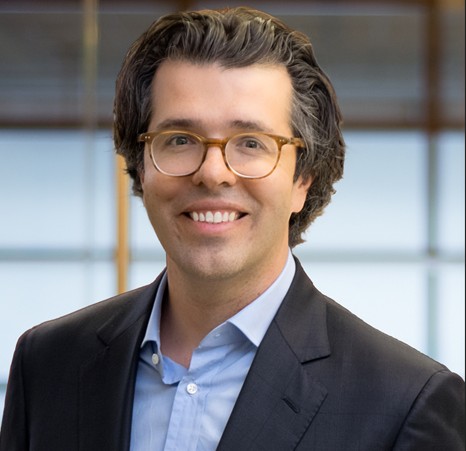
Sheasby, who has led and co-led multiple major trials involving computer memory, data systems, and patent disputes, says the challenge is not the technology itself. It is how that technology is explained.
“In one case involving memory modules, we had weeks of dense technical material,” Sheasby said. “If we tried to walk through every layer, the jury would have checked out. We reduced it to a few core questions. Everything else became support.”
The Shift From Detail to Clarity
Technology cases today often involve advanced systems that require specialized knowledge. Yet juries are made up of everyday people. That gap creates a clear constraint.
Research on decision-making shows that people can only hold a limited number of ideas at once—typically between four and seven. When information exceeds that limit, comprehension drops.
“In court, you see that limit immediately,” Sheasby said. “If you give people too many concepts, they don’t absorb more. They absorb less.”
As a result, successful trial teams are focusing less on volume and more on structure. Instead of presenting every detail, they prioritize the few points that directly affect the outcome.
Building a Narrative From Complex Systems
At the center of this approach is narrative. Not storytelling in the traditional sense, but a clear sequence that connects facts, actions, and consequences.
In recent litigation involving Samsung and Netlist, Sheasby and his team focused first on the agreement between the parties before introducing technical evidence. That structure allowed jurors to understand the dispute before evaluating the technology behind it.
“We didn’t start with patents or engineering,” he said. “We started with what was promised and what changed. Once that was clear, the technical details had context.”
This method reflects a broader shift. Instead of expecting decision-makers to interpret raw information, trial teams are organizing that information into a path that leads to a decision.
Why Sequence Matters More Than Content
Order plays a critical role in how information is received. Behavioral research shows that early framing shapes how later facts are interpreted.
In courtroom settings, that means the first explanation often defines the lens through which all evidence is viewed.
“We changed the order of an opening in one trial,” Sheasby said. “Same facts, different sequence. The reaction was completely different.”
That change did not alter the substance of the case. It changed how people processed it.
The Role of Discipline and Constraints
Time limits and attention spans impose natural constraints in trial settings. These constraints force teams to focus.
“You can’t say everything,” Sheasby said. “That’s the point. You have to decide what matters most.”
This discipline extends to every part of the case, from witness preparation to visual exhibits. Each element must serve a clear purpose.
In one case involving USB charger patents, his team removed large portions of technical explanation that did not directly affect the key issues. The result was a more focused presentation and a stronger outcome.
Technology as a Tool, Not a Solution
While advanced tools, including AI, are now used to manage large volumes of information, Sheasby emphasizes that they do not replace judgment.
These tools can identify patterns and organize data, but they cannot determine which facts will resonate in a courtroom.
“Software helps you find things faster,” he said. “It doesn’t tell you what matters to a jury.”
The responsibility for structuring the case—and making it understandable—remains with the trial team.
A Broader Lesson Beyond the Courtroom
The principles that guide successful technology litigation are increasingly relevant in other fields. As systems become more complex, the ability to simplify and structure information is becoming a critical skill.
Sheasby notes that the same approach applies in business, science, and communication.
“Complexity isn’t the advantage people think it is,” he said. “Clarity is what moves decisions.”
About Jason Sheasby
Jason Sheasby is a partner at Irell & Manella LLP based in Los Angeles. He focuses on high-stakes intellectual property and complex commercial litigation, often involving advanced technologies such as computer memory and data systems. He has served as lead or co-lead counsel in multiple major trials, securing significant jury verdicts in cases involving companies like Netlist, Samsung, and others. In addition to his legal work, he is a founder of TORL Biotherapeutics and a member of the Pomona College Board of Trustees.
The Post Jason Sheasby Shares How Complex Technology Cases Are Won in Courtrooms Today first appeared on ZEX PR Wire
